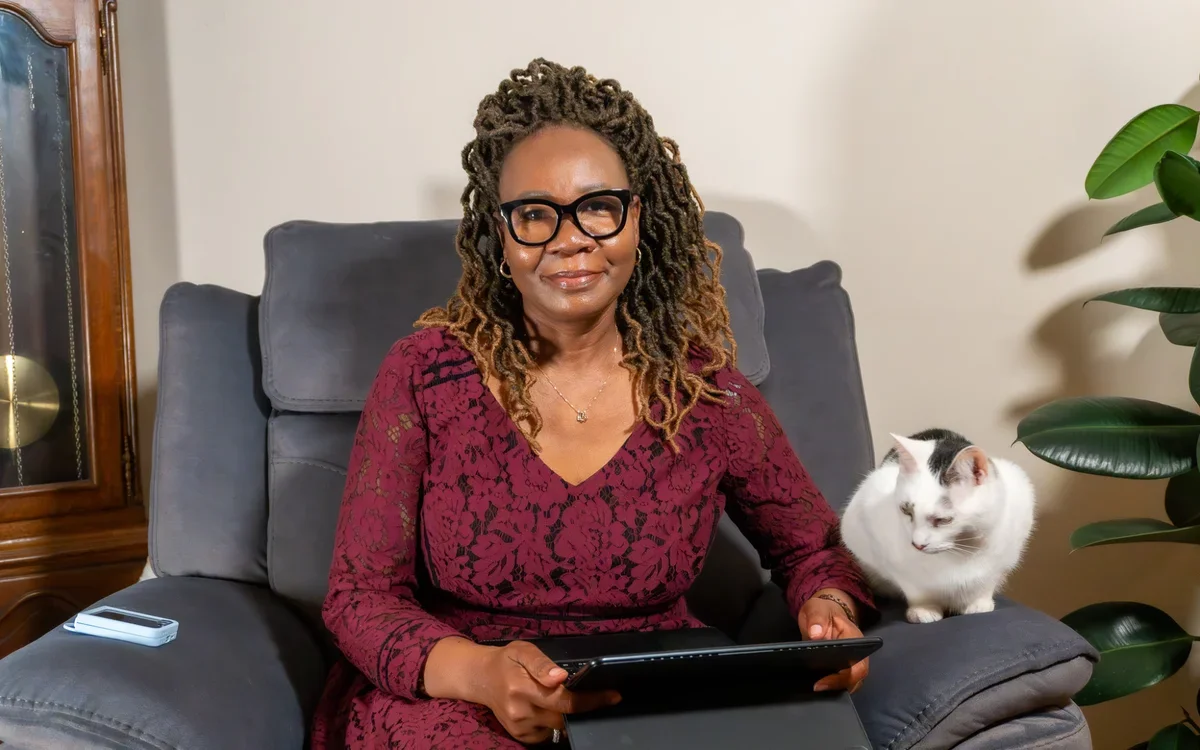
From the Room I Brought With Me
A letter from Dr Miriam Mavia-Zając | CEO & Founder - Neurodiverse You
In the next three minutes you’ll discover why Neurodiverse You (NDY) exists, what to expect from each issue, and one gentle way to join the conversation.
Welcome
There were rooms I waited to be let into. Places where the conversation seemed to already be happening, where others had chairs pulled out for them before they even arrived. Rooms where people were named, known, recognised, without needing to explain their insides to be believed.
I stood in corridors, waited at thresholds. Sometimes I tried to shrink enough to slip in unnoticed. Other times, I performed enough to be welcomed, but only if I left parts of myself at the door.
Eventually, I stopped waiting.
This letter comes from the room I brought with me. Not just a metaphorical room, a deliberate one. One that honours the part of me that got tired of justifying her presence.
And today, I want to talk about the rooms many of us were never invited into. And what we did next.
Naming the Rooms
Belonging is often framed as a single destination, yet for many neurodivergent people—especially those whose intelligence, gender, tone, colour, pace, or history unsettled the status-quo—belonging was conditional, if it arrived at all.
Below are additional “rooms” that frequently sat behind silent velvet ropes.
| Room | What it promised | How the door stayed shut |
|---|---|---|
| The staff-room | Casual information flow, informal mentoring, social glue | Insider jokes coded in neurotypical shorthand; invitations whispered, not posted |
| The diagnostic room | Language, validation, access to accommodations & support | Gatekeeping clinicians, misdiagnoses, long wait-lists, high private fees |
| The friendship circle | Shared joy, social safety net | Invitations issued between classes, coded banter, sensory-heavy venues |
| The boardroom | Decision-making power, pay equity, policy influence | “Executive presence” mould, back-channel nominations, fluorescent glare |
| The parent group | Peer advice, solidarity, playground meet-ups | Judgment on pacing, routines, meltdowns; pushy sensory environments |
| The “you seem fine” space | Being believed without proof, everyday ease | Invisible-disability scepticism, “but everyone’s a bit ___”, no adaptations |
| The classroom group project | Shared credit, collaborative discovery, friendships | Leaders pre-selected their friends; divergent thinking labelled “off topic” |
| The performance-review meeting | Recognition, advancement, pay equity | Metrics built for extroverted output; “flexibility” praised only when it looked typical |
| The brainstorming huddle | Playful idea-building, influence on strategy | Rapid-fire talking rewarded; pausers and processors sidelined |
| The networking drinks | Future jobs, reputational currency | Over-lit, noisy venues; the social tax of masking after hours |
| The maternity ward / perinatal circle | Community in new parenthood | Judgement of sensory needs, parenting styles, and executive-function differences |
| The faith-community committee | Spiritual belonging, shared service | Unspoken etiquette rules; leadership roles offered to “safe” personalities |
| The mental-health waiting list | Professional support, validation | Two-year queues, dismissal as “high-functioning”, cost barriers |
| The disability panel | Policy-shaping, authentic representation | Quotas filled by the most media-palatable voices; intersectionality ignored |
| The wellness retreat | Restorative silence, nervous-system repair | “Digital detox” demands ignoring access tools; sensory-overload décor |
| The “fun” ice-breaker | Inclusion, team cohesion | Forced eye-contact games; surprise rules that penalised literal/differently gifted thinkers |
| The grief circle | Communal mourning, rituals | Emotional expression policed by neurotypical norms of timing and tone |
| The “let’s grab coffee” mentorship | Career guidance, sponsorship | Plans made ad-hoc; logistics unsuited to executive-dysfunction or chronic fatigue |
| The comment section | Voice, dialogue, visibility | Tone-policing, derailment, “You’re overreacting” kind of replies |
Sometimes, we got in, but only if we masked. Dimmed our brilliance. Smiled. Shrunk ourselves. Softened. Translated ourselves.
But sometimes, entry wasn’t even on offer.
And so, like many of you, I began to build. Not loudly. Not quickly. But with fierce tenderness. I began creating a room that didn’t need to be entered with permission.
This newsletter, and Neurodiverse You itself, is part of that room.
A Takeaway for You: The Rooms I Waited to Enter / The Rooms I Now Carry
As part of this issue, I’ve created a small reflection sheet- a space for you to name:
-
The rooms you longed to enter (and what they represented)
-
The rooms you now carry with you (and what they make possible)
It’s not a worksheet for fixing. Just a gentle invitation to witness your own journey.
Click to download the worksheet
If you feel moved to share a room you now carry, you can email me at [email protected] I read every one. Or simply leave a comment on this post below.
Before You Go
Sometimes we don’t notice how heavy it’s been until we name it.
Sometimes we don’t know we’ve built something sacred until someone else steps inside and says: this feels like home.
Thank you for being here.
Thank you for staying.
Next time, I’ll return From the Pages I Didn’t Publish. Until then:
Look after your nervous system.
With care,
Dr Miriam
Consultant Chartered Psychologist
Founder, Neurodiverse You
Make sure you don’t miss out on our next newsletter
Signup to the Neurodiverse You Newsletter
You might also be interested in…
Our Assessment & Follow-up Services
Neurodiverse You offers timely, comprehensive ADHD, ASD & AuDHD Assessment, Diagnosis, Reporting & Coaching services for children over 10 yrs of age and adults. We also provide run regular support groups in partnership with ADHD UK.
Visit our Services Page to find out more.